
Protect what matters
Our award-winning Canadian protection hat protects your toddler's head with patent-pending technology, during the phase of life when they're most at risk of head trauma. Fits head sizes 45 to 52 cm, which covers most children from 12 to 48 months.
Proven and tested
Kiddocap works with pediatric clinics, leading biomechanics experts, and Canadian universities, where we're conducting research on head injury in toddlerhood. Every component is tested in independent labs: chemical composition, physical and mechanical properties, penetration resistance and impact absorption. Advanced technology, because your child deserves the best.
A premium product
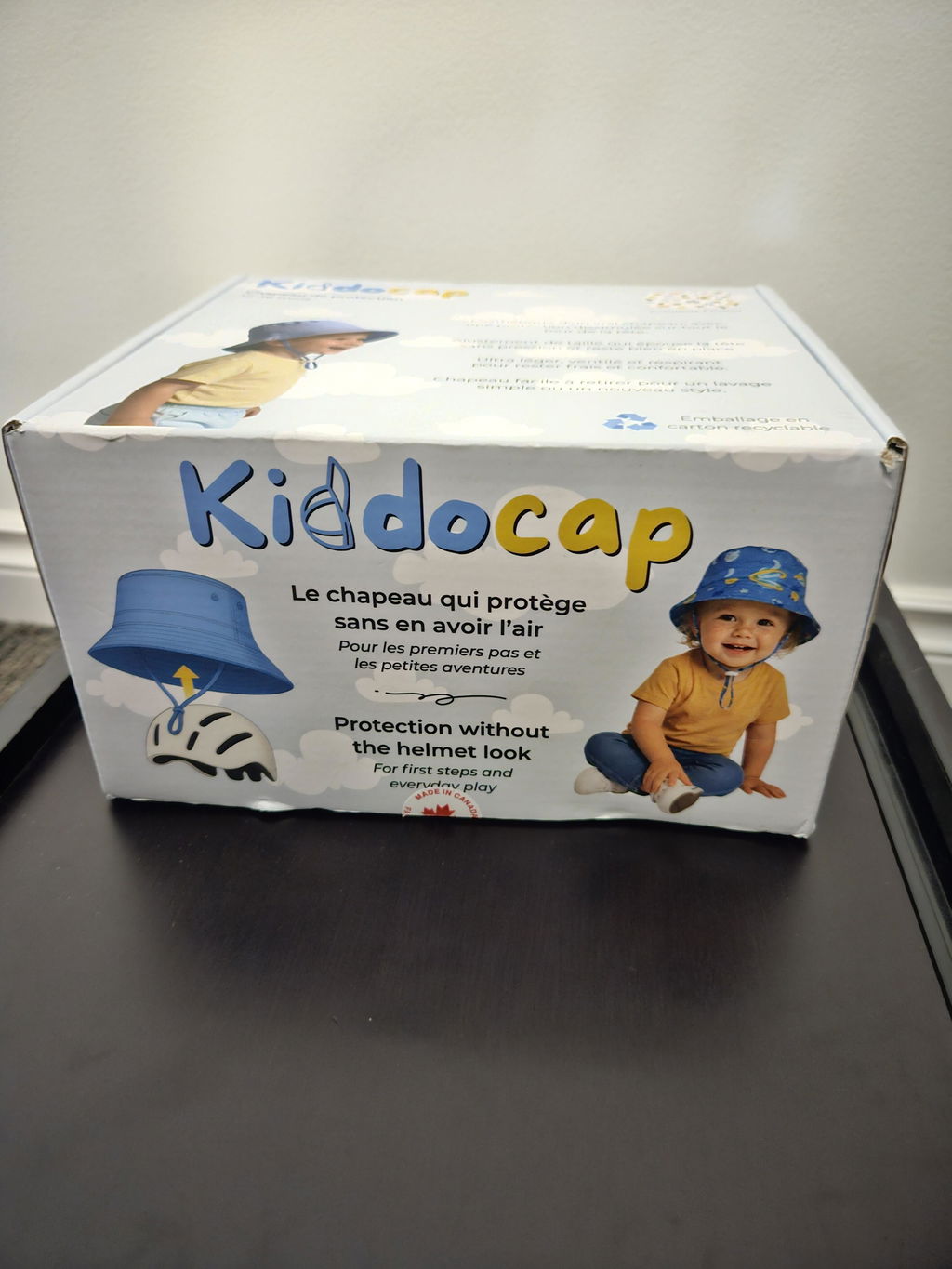
Made in Canada with premium materials. A soft cotton hat on the outside. Inside, real protective engineering: a precision-moulded natural ABS inner shell and ultra-light EVA foam. The result: a premium helmet that looks like a hat. Light, breathable, super comfortable, with innovative high-end protection technology built right in.
We care
We set out to build a product you'd never regret buying, and we made it: hundreds of Canadian families already trust Kiddocap. Lifetime guarantee on anything that breaks. 30 days to test the fit. Real humans answering when you write to us. Because what we're really after is your peace of mind. And his growth: taking risks is how a child learns to trust his own body and judgment. It's not something to prevent, it's something to protect. So we didn't build a way to hold him back. We built a safer environment that goes wherever he does.
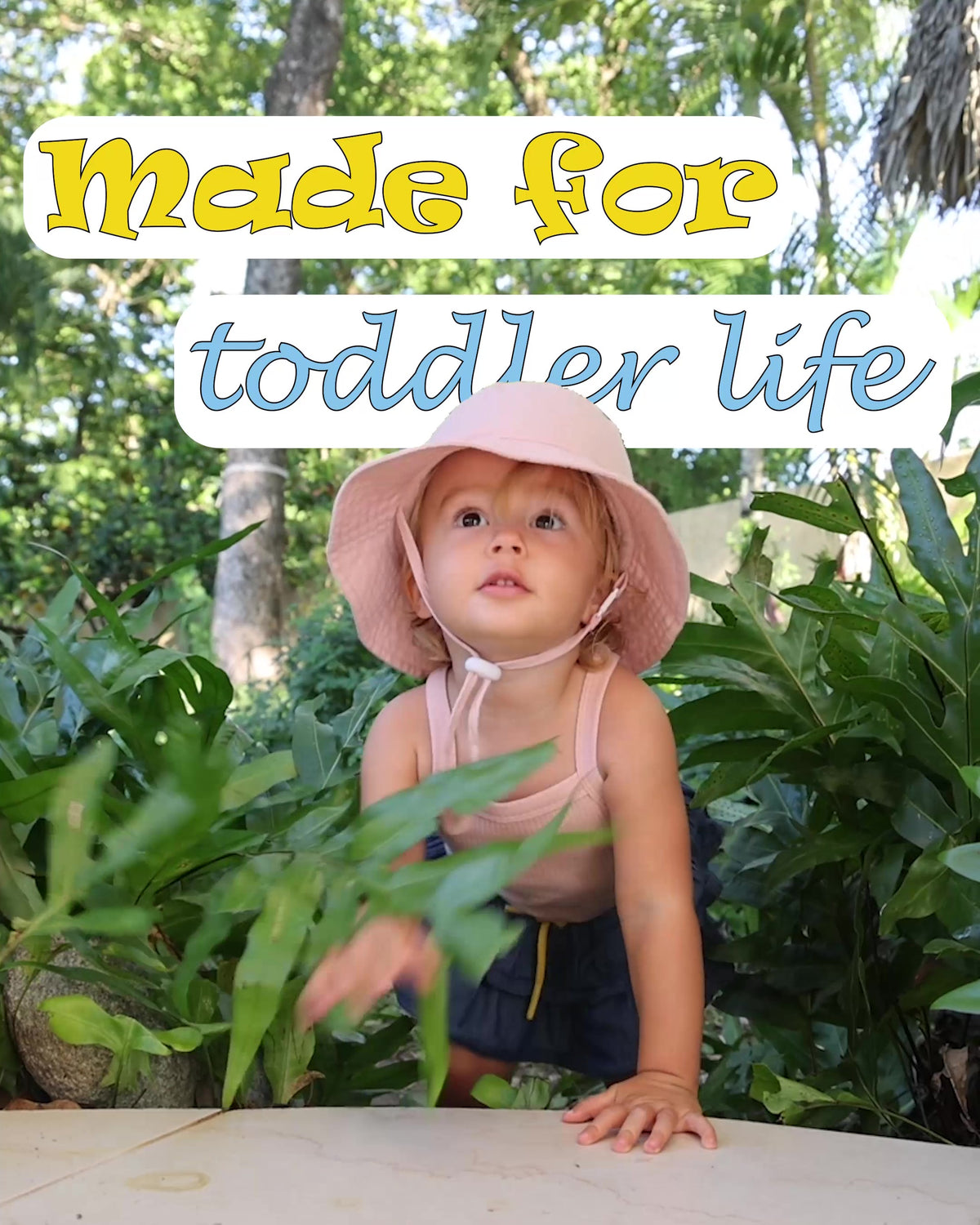
« Falls are the leading cause of traumatic brain injury, especially in young children, with a significant risk of long-term consequences. »
World Health Organization
FAQ
Falls are the number one reason Canadian children end up in an emergency room. About 187,700 visits a year. Public Health Agency of Canada
A toddler learning to walk falls about 17 times an hour. Close to 100 times a day. Adolph et al., 2012
Their head is much heavier, relative to their body, than yours. That's why they land head first instead of catching themselves. Yoganandan et al., 2009
Their skull is still soft. It bends instead of resisting, and passes the force straight to the brain. Coats & Margulies, 2006
Falls are the leading cause of brain injury in children, and the rate peaks between ages 0 and 4. CDC
And a toddler can't tell you his head hurts. He doesn't have the words yet, which is why pediatric guidance is to take every head injury in a small child seriously, even when he pops back up smiling. CDC
The damage doesn't always stay in childhood. An Oxford study of over a million people found childhood brain injury raised the risk of low educational attainment by about 60%, and of ending up on disability by about 80%. Sariaslan et al., 2016
Most falls are nothing. Nobody knows which one matters until it's already happened.
No. Children learn to walk by repeating, not by getting hurt.
Balance lives in the cerebellum, the part of the brain that learns like a musician learns a piece: thousands of small repetitions, each one slightly corrected. A toddler takes about 2,368 steps an hour. Those steps are the lesson.
Pain doesn't teach caution. It teaches fear. A hard knock doesn't improve balance. It creates hesitation, and a hesitant child practises less.
The real question was never protection versus learning. It's hovering versus gearing up. A protected child climbs higher, explores farther, and gets more practice, not less. Kiddocap doesn't restrict movement, doesn't block sight or hearing, and weighs little enough to be forgotten. What it removes isn't the learning. It's the worst outcome of one unlucky landing.
Every safety habit was once called overprotective. Seatbelts. Car seats. Bike helmets. Each is now normal.
When researchers measure what a helmet does, the numbers aren't subtle. A review of bike helmet studies found roughly 60% fewer head injuries and up to 73% fewer deaths. Different activity, same physics: a shell that spreads the force, foam that slows the head. Büth et al., 2023
Pediatricians recommend head protection, and the same experts encourage risky play: climbing, heights, speed. Let them climb, and protect them. Those two ideas were never in conflict. AAP, 2022
The only option no expert recommends is the one most families pick without thinking: nothing at all.
Yes, and we're building the science that didn't exist.
Bicycle standards were written for older children on wheels. Nothing had ever been written for a one-year-old learning to walk. So we work with biomechanics experts at a leading Canadian engineering school to develop testing protocols for this age.
And we didn't wait. Kiddocap passed impact absorption and penetration resistance testing in independent laboratories. Every material was tested too: chemical composition, physical and mechanical properties, verified independently.
About as Canadian as a product gets.
Invented in Canada. Designed in Canada. Manufactured in Canada. Assembled in Canada. Shipped from our Canadian distribution centre straight to your door.
Not designed here and made overseas. Not imported finished and stickered at the border. Built here, start to finish.
We couldn't make it more Canadian if we tried.
First steps and finding balance. The wobbly months when they walk before they can catch themselves.
Everywhere they go. Home, the park, the trail, the pool deck, the playground, the splash pad.
When play gets active. Soccer, trampolines, slides, climbers.
Anytime you want peace of mind.
Lifetime guarantee. Kiddocap is guaranteed for life against breakage. If any part of it breaks, the clip, the shell, the stitching, we replace it.
30 days to decide. If it isn't right for your child, return it within 30 days, unused and in original condition, for a refund of the product price and taxes.
Fast shipping. Orders leave our Canadian distribution centre within one business day.
Parents reviews
Swipe to watch video testimonials


It is very durable and exactly how it is advertised. Love it
Great hat and helmet. Fits great and no one knows its a helmet.
Achat parfait, aucune hésitation à recommander.
Mon garçon le met sans rechigner, un vrai plus.
Très belle qualité, on adore.
Léger, confortable et rassurant. Parfait.
My daughter wears it every day now.
Good product overall, wish it came in more colours.
Does the job and looks good. Recommend.
Ça m'aide à m'inquiéter un peu moins quand elle court partout dans la maison.
Tranquillité d'esprit à chaque chute. Merci !
On l'utilise tous les jours depuis qu'il est arrivé.
Great quality and looks just like a normal hat.
Chaque sou en vaut la peine pour la tranquillité d'esprit.
So happy with it, my son barely notices he's wearing it.
Étonnamment léger. Je m'attendais à quelque chose de plus encombrant.
Parfait pour nos sorties. Léger et joli.
Ma fille se sent bien dedans, c'est le principal.
Fait exactement ce qui est promis. Simple, confortable, look normal.
Qualité au rendez-vous. Très satisfait.
Vraiment contente de la qualité.
Excellent, je recommande aux autres parents.
Bonne qualité, taille fidèle. Ça lui a pris une journée ou deux pour s'y habituer, mais maintenant ça ne la dérange pas du tout.
Bien mais un peu grand pour nous au début.
On l'a acheté pour les sorties au parc, mais on a fini par l'utiliser tous les jours à la maison. Léger, confortable et rassurant pour des parents avec des tout-petits actifs.
Rassurant au parc quand il grimpe partout.
Ma fille demande maintenant à le porter, sans faire d'histoire.
Ma petite le porte sans faire d'histoire.
Je n'étais pas certaine que ça fonctionne vraiment, mais oui. Personne à la garderie n'a remarqué au début que ce n'est pas un chapeau ordinaire.
Vraiment content de notre achat.
Bonne taille, on dirait un chapeau normal, et ça fait le travail.
Beau produit fait au Québec, ça compte pour moi.
Il le garde même à la maison. Parfait.
Exactement ce qu'on cherchait.
Acheté au salon, aucune déception.
